U.S. Supreme Court tariffs ruling provides welcome clarity and a pathway to reducing market distortions
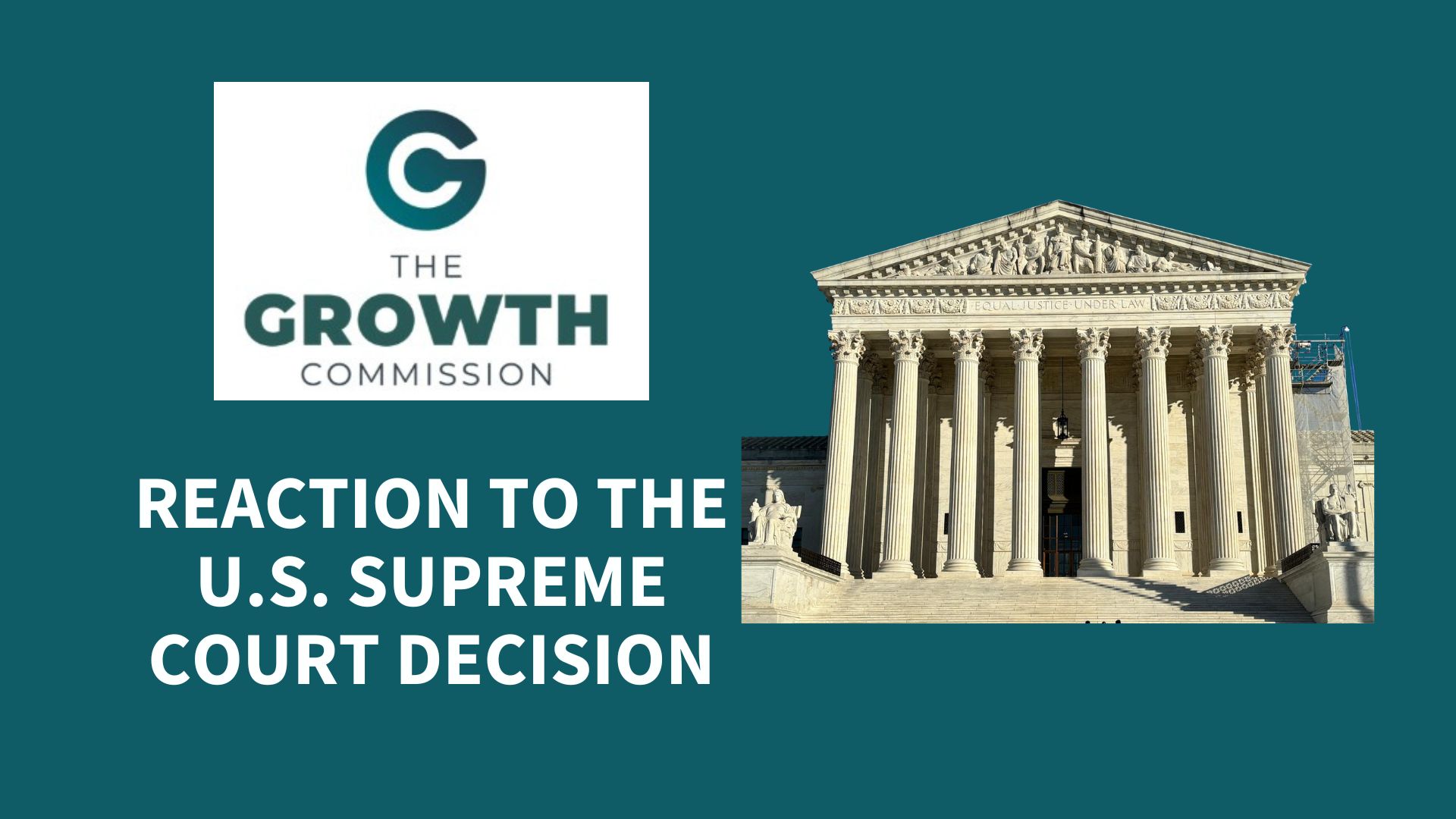
Growth Commission Chairman Shanker Singham and fellow Commissioners named below have issued the following response to the U.S. Supreme Court striking down President Trump’s tariffs imposed under the International Emergency Economic Powers Act:
“The U.S. Supreme Court’s decision to strike down President Trump’s broad global tariffs imposed under the International Emergency Economic Powers Act (IEEPA) provides business and U.S. trading partners alike with some welcome clarity.
“It pushes the Administration’s tariff policy towards a narrower ‘landing zone’ where tariffs need to be justified as countermeasures to foreign barriers and Anti‑Competitive Market Distortions (ACMDs), rather than as a free‑floating instrument for revenue, reshoring or general foreign‑policy signalling. It also brings Congress more into its traditional role in trade policy.
“The White House’s immediate response to the decision underscored this point, with a temporary global tariff under Section 122 of the Trade Act of 1974, coupled with new Section 301 investigations into unfair foreign trade practices. Indeed, these moves are broadly in line with Growth Commission proposals of July 2025.
“We have long argued that the durable and economically constructive strand of the Trump Tariff Doctrine is its focus on ACMDs, the modern barriers that shape trade outcomes. ACMDs are behind‑the‑border regulatory and institutional measures that restrict entry, weaken property rights and skew competition, and we define them as foreign government actions that create artificial advantages for overseas firms, including:
- discriminatory tariffs
- regulations that exclude foreign competitors
- weak protection of property and intellectual property and
- state‑linked industrial favouritism
“With the IEEPA off the table, the remaining broad tariff authorities are the ones tethered — explicitly or implicitly — to those distortions. As such, the Supreme Court decision increases predictability, moving the debate away from Presidential whims or impulses and instead towards hard analysis of which foreign barriers can justify the imposition of tariffs.
“It is important to note that the imposition of tariffs under Section 122 of the Trade Act is a temporary measure, only valid for 150 days. Section 301 is the workhorse for durable action, built as it is around investigations into foreign acts, policies and practices that are ‘unreasonable’ or ‘discriminatory’ and that burden or restrict U.S. commerce. While it takes months, it is structurally aligned with ACMDs because it is fundamentally about foreign-created distortions.
“Meanwhile, Section 338, which permits tariffs up to 50% against countries that discriminate against U.S. commerce, is still triggered squarely by discriminatory foreign barriers rather than being a move to raise revenue for its own sake – which is why we believe it should be used.
“The practical implications of all this are straightforward: the more durable the tariff, the more it will need to be framed — and supported — as a calibrated response to identifiable ACMDs. And there is clarity for U.S. trading partners as the criteria for action become more concrete, with a reduction in distortions prompting a reduction in the tariff.
“Trade negotiations will therefore increasingly become bargains about contestability: lowering discriminatory regulation, fixing licensing and conformity‑assessment barriers, strengthening property‑rights protection and dismantling state-linked favouritism that blocks market entry. The Growth Commission’s landing zone framework is precisely about this: deals where U.S. tariffs can actually go down as ACMDs go down.
“In short, the credible pathway to trade deals and tariff relief is concrete reform that reduces market distortions. For businesses, the strategic imperative is to map ACMD exposure product‑by‑product and build the evidentiary record that will matter in Section 301‑style proceedings.”
Shanker Singham (Growth Commission Chairman) and the following fellow Commissioners:
Alden Abbott
Barbara Bowie-Whitman
Stephen Entin
Douglas McWilliams
Ewen Stewart
Thomas Stratmann