Resetting The UK’s Relationship With The EU: An Economic Analysis Of The Options
The Growth Commission report, Resetting The UK’s Relationship With The EU: An Economic Analysis Of The Options, is published today in advance of the Prime Minister travelling to Brussels for Friday’s summit with EU leaders where he hopes to begin forging a new post-Brexit relationship between the UK and the bloc of 27 European nations.
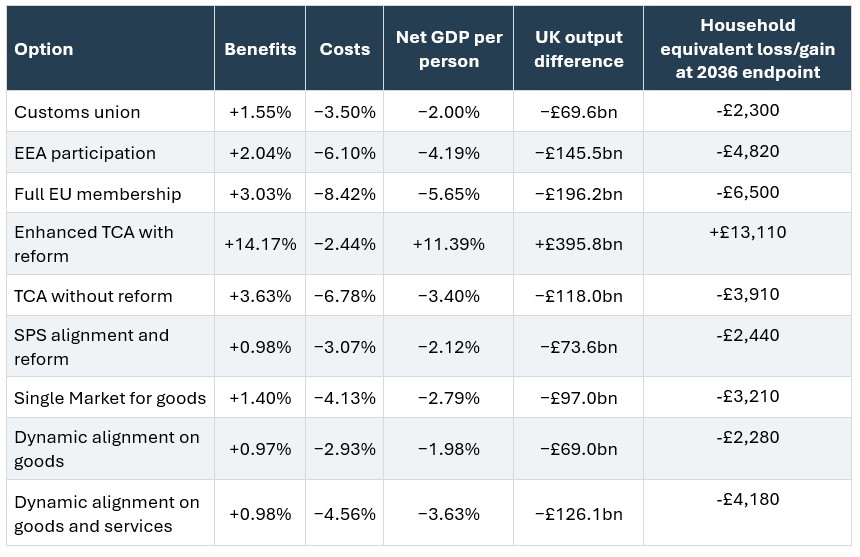
Mr Burnham has said that he will consider a “whole range of options” for the country’s future relationship with the EU and has not ruled out seeking to rejoin. The 170-page Growth Commission report comprehensively sets out in black and white the likely economic impact of nine possible options on national output between now and 2036.
Top of the Prime Minister’s shopping list is a new agrifood deal involving dynamic alignment of Sanitary and Phytosanitary (SPS) regulations and he is set to finalise an agreement that will see the UK sign up to EU rules and standards now and in the future. While this will cut red tape for British food, animal and plant exports to the bloc, it will gravely limit the current freedom to import from the rest of the world at competitive prices without quotas and to innovate through technologies such as gene editing.
The Growth Commission concludes that the savings achieved through less red tape for UK exporters (noting that only six per cent of UK food production goes abroad) will be dwarfed by higher prices, meaning that the country will be around £74 billion worse off over the coming decade.
The report asserts:
“The Growth Commission recommends improving the existing Trade and Cooperation Agreement (TCA) negotiated in 2020 while pursuing domestic regulatory reform. Under the assumptions examined in our analysis, this offers the largest estimated gain in GDP per capita among the options assessed.”
National output over the next 10 years would rise by nearly £400 billion or over 11 per cent per person if this route were pursued by the Prime Minister.
But all the other options on the table hinted at by the Prime Minister and his allies – such as rejoining the customs union and/or the single market and dynamic alignment with EU rules on goods and services – would cost the country a significant sum. Abandoning Brexit altogether and rejoining the nascent superstate of 450 million would have the highest cost to the UK of almost £200 billion by 2036.
The figures in the report are the result of intricate modelling of the impact on the UK economy of the thousands of rules and regulations covering business and commerce – many of which amount to “anti-competitive market distortions” and originate in Brussels.
“The model tells us that domestic regulatory reform is by far the biggest driver of growth and options which constrain that domestic regulatory autonomy should be avoided. But equally if the UK chooses not to reform, then none of the options with the EU, including full membership, are net positive,” the report concludes.
Shanker Singham, Chairman of The Growth Commission and one of the world’s leading international trade experts, said:
“This report is a forensic analysis of all the options and provides the government with the clear costs and benefits of each in turn. We have found that aside from enhancing the existing trade agreement with the EU and engaging in substantial regulatory reforms, all of the options incur a net cost for the UK, some substantially so. Our report provides a roadmap for the UK to secure a prosperous future for its people while enhancing the relationship with the EU.”
Douglas McWilliams, Growth Commission member and co-author of Prosperity Through Growth, added:
“The latest data shows the tech sector accounting for nearly a quarter of all UK GDP growth in the past year. A driving force behind the success of the UK tech sector has been its freedom from EU regulation and its consequent ability to adopt the world’s best tech practices rather than being part of a vain attempt to build up European tech businesses behind protective barriers. So a significant chunk of the UK’s entire GDP growth is at risk from adopting the EU’s digital regulations, all of which have been imposed without any UK input since Brexit. The EU’s own domestic tech sector is sluggish (other than in Sweden and Denmark) and the UK is at risk of being infected by this malaise.”
James Carter, Growth Commission member and former Associate Director of the U.S. National Economic Council, said:
“The U.S. has two agreements with the UK that were negotiated at a time when there was no expectation that the UK would become part of the EU’s SPS zone, which includes some of the most damaging regulations for U.S. farmers, ranchers and food producers. That changes the picture significantly and puts the benefits of those agreements at risk. There is a real likelihood that the U.S. could withdraw those benefits or take other retaliatory action.”